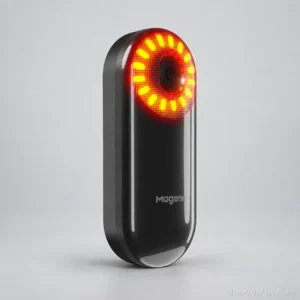
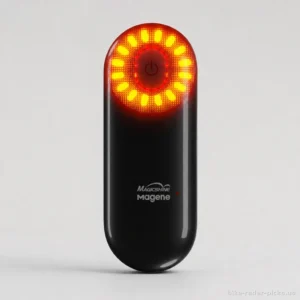
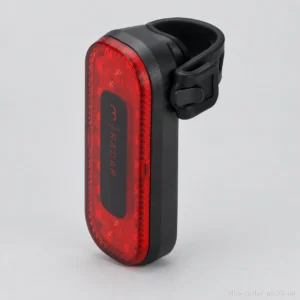
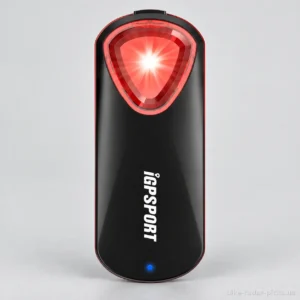
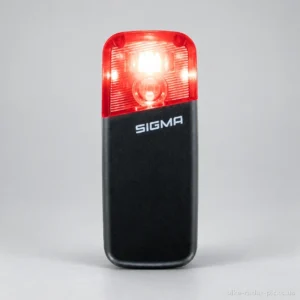
Sigma RECO 80 LINK
Top-ranked for detection range and detection angle.
Read the review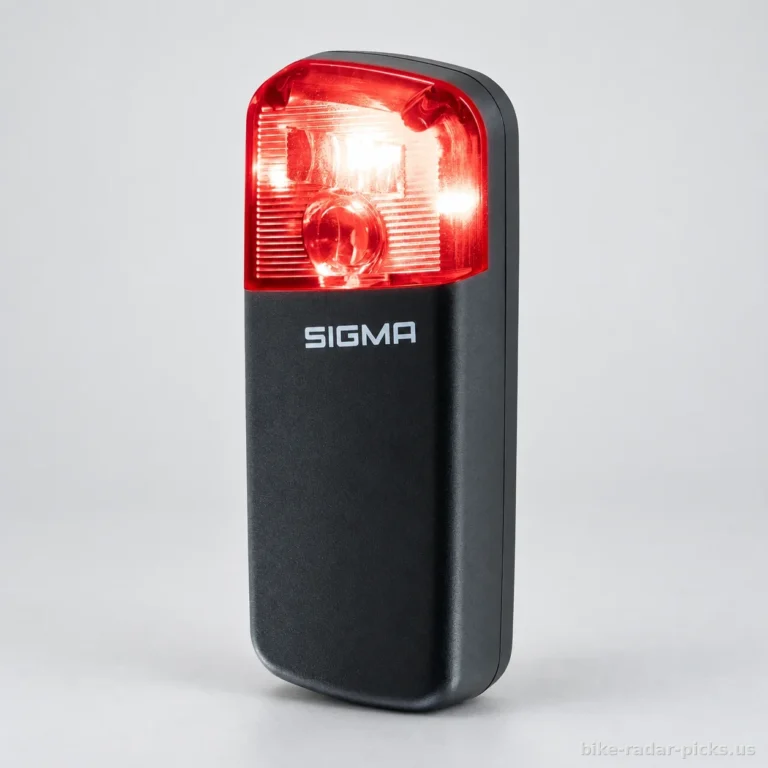 Our rankingsThe best bike radars23 bike radars
By compatible with a bike computer
By detection range
By battery life
Features and options
Our guides to choosing
Prices in USD are indicative: they are converted from the reference catalogue prices in euros at a fixed rate (EUR 1 = $1.08, 9 Sep 2026) and are not prices from a local retailer. The price at your retailer prevails. (14 Sep 2026)
This comparison of the best value bike radars helps you choose. Use the filters to narrow your search.
Prices collected from retailers are for guidance only: they may have changed since, the current price is the one shown by the retailer. No price is shown for models sold only on Amazon. Amounts converted from reference prices in euros using a dated exchange rate.
Top-ranked for detection range and detection angle.
Read the review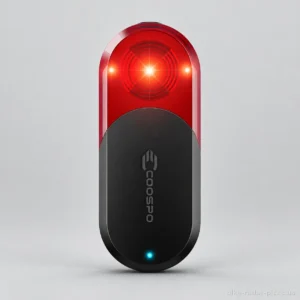
Top-ranked for weight.
Read the review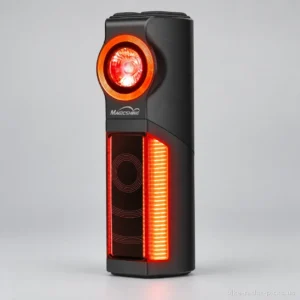
Top-ranked for battery life, light output and equipment.
Read the review| Rankings | Rating | Price | Detection range | Battery life | Weight | Light output | Detection angle | Charging time | Battery capacity |
|---|---|---|---|---|---|---|---|---|---|
| 1. Sigma RECO 80 LINK | 8.9/10 | n/a | 160 m | 30 h | n/a | n/a | 60 ° | 3 h | 1350 mAh |
| 2. COOSPO TR70 | 8.5/10 | n/a | 140 m | 40 h | 63.7 g | 70 lm | 40 ° | 2 h | 1500 mAh |
| 3. Magicshine SEEMEE R300 | 8.5/10 | n/a | 140 m | 100 h | n/a | 300 lm | 35 ° | 2.15 h | 3350 mAh |
| 4. Magene L508 | 8/10 | $97 | 140 m | 19 h | 65 g | n/a | 40 ° | n/a | n/a |
| 5. Magicshine SEEMEE 508 | 7.9/10 | $107 | 140 m | 16 h | 65 g | 20 lm | 40 ° | n/a | 1500 mAh |
Rankings are based on our review ratings, calculated by comparing manufacturer specifications across the full catalogue.Our methodology.
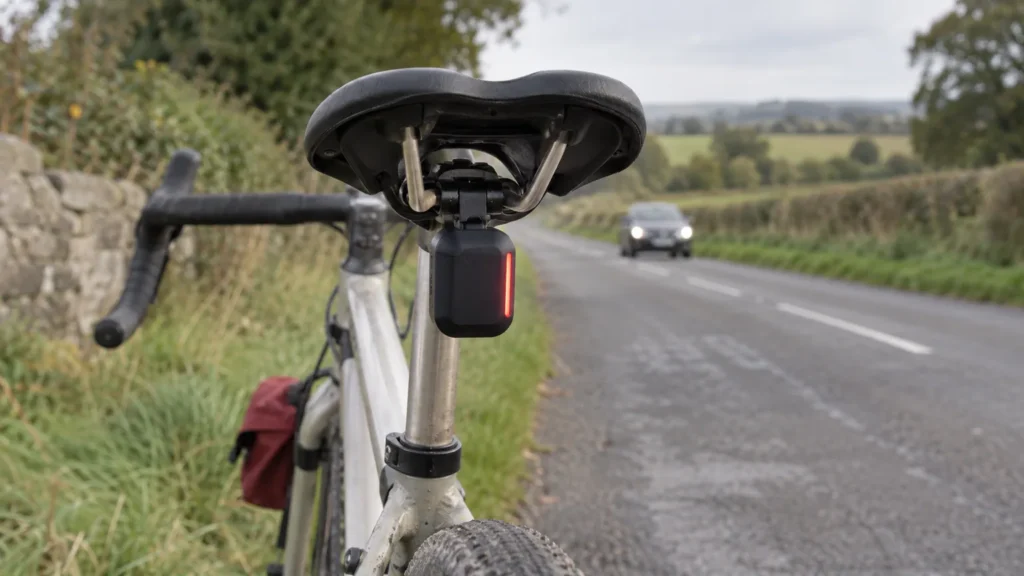
A rear bike radar alerts you when a vehicle approaches from behind. It provides additional information about traffic, without you having to look over your shoulder constantly. If it includes a light, this serves a separate purpose by helping other road users see you.
These functions should be clearly distinguished. Radar range refers to vehicle detection. Light visibility refers to the distance from which the light can be seen under the stated conditions. A light that is visible from far away does not mean the radar detects cars at that same distance.
Depending on the model and the paired device, alerts appear on a compatible bike computer or a phone app. Product specifications mention visual and audible warnings in particular. Their usefulness also depends on whether you can notice them while riding without taking your attention off the road for too long.
This type of equipment is particularly suitable for cyclists who regularly share the road with motor vehicles. Your needs will vary depending on how you ride.
Your existing equipment matters just as much as how you ride. If you are looking for a bike radar compatible with Garmin, check your bike computer's exact model and whether it supports alerts. The presence of ANT+ or Bluetooth alone does not establish full compatibility.
The Bryton Gardia R300L and Magene L508 illustrate the options at the entry level, but their similar positioning does not make their features interchangeable.
Radar helps you stay aware. It does not guarantee that every vehicle will be detected or that overtaking will be safe. Above all, the absence of an alert does not mean there is no danger. You still need to look before moving out or changing direction.
A longer advertised range does not demonstrate greater reliability either. Our analysis of the specifications lets us compare documented functions, but cannot confirm their actual effectiveness on the road. The specifications also contain missing or contradictory information that should influence your decision.
To make a useful choice, start with your bike computer or phone, then consider battery life in each mode and mounting requirements. The selection on this page helps you compare models based on these criteria, their market positioning and the points to check before buying.
The Bryton Gardia R300L is our pick for best value for money on paper, provided it is compatible with your equipment. The iGPSPORT SR30 deserves consideration for its claimed battery life, which needs clarification for each mode. The Magene L508 has detailed specifications to help you compare its features with your needs.
Our selection is based on an analysis of retailer listings, without handling the products or access to usable user feedback.
| Model | Recorded price | Weight | Dimensions | Water resistance level |
|---|---|---|---|---|
| Garmin Varia RVR315 | Check the retailer for pricing | 71,0 g (2,5 oz) | N/A | N/A |
| iGPSPORT SR30 | Check the retailer for pricing | 69 grams | 99 x 39,7 x 20,3 mm | Water-repellent |
| Bryton Gardia R300L | Check the retailer for pricing | 20 Grams | 40L x 21W x 97H millimetres | Watertight |
| Magicshine SEEMEE 508 | Check the retailer for pricing | 65 Grams | 38L x 25W x 94H centimetres | Waterproof |
| Magene L508 | Check the retailer for pricing | N/A | 13,5L x 7,5W x 7,5H centimetres | Waterproof |
| Magicshine SEEMEE R300 | Check the retailer for pricing | 3,99 ounces | 29L x 34W x 96H millimetres | Waterproof |
| BBB Cycling Signal Radar BLS-251 | Check the retailer for pricing | n/a | n/a | n/a |
| Sigma RECO 81 LINK | Check the retailer for pricing | n/a | n/a | n/a |
| Lezyne Radar Drive Rear | Check the retailer for pricing | n/a | n/a | n/a |
The table compares the stated specifications. To choose between these models, focus primarily on your equipment and the details that still need checking.
ANT+ or Bluetooth do not guarantee that you will receive radar alerts. Check the exact model of your bike computer in the compatibility documentation, then check the available features: vehicle display, audible alerts and light adjustment.
For a Garmin-compatible cycling radar, a general mention of the brand is not enough. The SEEMEE 508 mentions Garmin, among others, without specifying which bike computers are supported. Confirm compatibility with your model before ordering.
Without a bike computer, check the intended app. The RVR315 mentions Varia with audible and vibration alerts. Lezyne lists Radar Ally on iOS and Android. App control is documented for the SR30, but this does not specify all the alerts available on a phone.
Bryton and BBB claim up to 190 m, Sigma 160 m, the SR30 150 m and Magene 140 m. A longer range is a point of comparison, without proving better real-world reliability.
Radar range and light visibility are different. The former concerns detected vehicles; the latter, the distance at which the light is claimed to be visible. A light claimed to be visible from 1,6 km therefore does not detect cars at that distance.
The SEEMEE 508 lists both 140 m and 153 m: ask for confirmation. Also, do not compare the 220° stated for Bryton with the radar angles of other devices without clarifying what it refers to.
Compare battery life in the mode you will actually use. Magene claims up to 16 h depending on the mode, and Bryton up to 17 h. The SR30 lists 20 h and 25 h in different sections, without sufficiently clear conditions.
If you take long rides with a steady light, ask for the battery life in that specific mode. A maximum runtime does not necessarily reflect this use. For group rides, prioritise a cycling radar with a peloton mode; Sigma specifies that this mode reduces brightness for cyclists behind you.
Do not choose solely on lumens. The SEEMEE R300's claimed maximum of 300 lumens does not establish better detection or longer battery life.
Check your seatpost shape, the included mount and the space available beneath a saddlebag. Bryton details several compatible cross-sections; check them against your bike before buying.
The SR30 lists both seatpost and handlebar mounting: confirm what is included. Disregard the clearly questionable dimensions of the SEEMEE 508 without arbitrarily correcting them. Finally, distinguish a documented IPX7 rating from a simple marketing claim of “waterproof”.
This bracket already offers several options to compare.
The Sigma may appeal for its group mode, and the Lezyne for its dedicated app. These features alone do not, however, demonstrate better value for money. Check the missing specifications before paying more.
Start with the Bryton, the SR30 and the Magene, then choose between them based on your cycling computer, ride duration and mounting setup. A consistent specification sheet is worth more than a spectacular promise. The radar complements your own observations and never replaces a visual check before moving out.
The available information does not establish which bike radar is most effective in real traffic. The Bryton Gardia R300L and BBB Cycling Signal Radar BLS-251 claim detection ranges of up to 190 m, but range does not prove alert reliability. When choosing, also check how alerts appear on your bike computer, which warnings are available and the battery life in the mode you intend to use.
The Bryton Gardia R300L has more useful specifications than the Garmin Varia RVR315. Bryton claims a detection range of 190 m, a 73-lumen light and up to 17 hours of battery life. Garmin mentions connectivity with a compatible device or the Varia app, but its product listing contains inconsistencies regarding lighting and battery life. These points need clarification before purchase.
The Magicshine SEEMEE 508 is an option worth checking, as its specifications explicitly mention compatibility with Garmin devices. When choosing a Garmin-compatible bike radar, however, check your exact bike computer model and whether it supports radar alerts. ANT+ or Bluetooth connectivity alone does not guarantee full functionality. The Magene L508 also supports these protocols, but no detailed list of compatible bike computers is available.
Yes, some specifications include use with a phone. The Garmin Varia RVR315 lists the Varia app and its audible and vibration alerts. The Lezyne Radar Drive Rear lists connectivity with the Lezyne Radar Ally app, available on iOS and Android. Before ordering, check which features are available on your phone and the conditions for receiving alerts during your ride, especially when the screen is locked.
Radar range is the claimed distance at which a vehicle can be detected, while rear light visibility is the distance at which the light can be seen. The Magene L508, for example, claims 140 m of detection range and up to 1,2 km of light visibility. These figures describe different functions. Similarly, the radar detection angle should not be confused with the light's visibility angle.
Compare battery life in the mode you intend to use, rather than relying solely on the claimed maximum. The iGPSPORT SR30 lists up to 25 hours and up to 20 hours under conditions that are not clearly specified. The Magene L508 claims up to 16 hours depending on the selected mode. If you are looking for a bike radar with a peloton mode, ask for the battery life for that setting rather than assuming it matches radar-only mode.
No, a bike radar helps you stay aware and does not replace looking before a manoeuvre. An alert tells you that an approaching vehicle has been detected, without guaranteeing that you can move out or that it will be safe for the vehicle to overtake. No alert does not mean no danger. Continue to watch traffic, check the space available and signal your changes of direction.