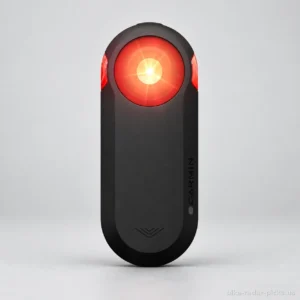
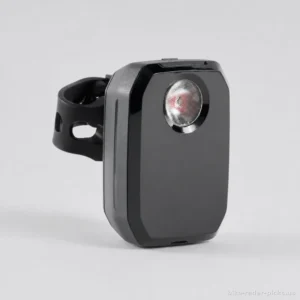
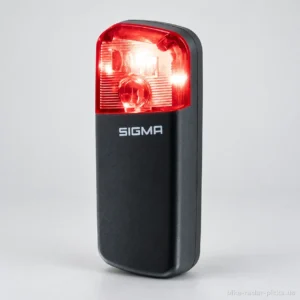
Sigma RECO 81 LINK
Top-ranked for detection range, battery life, detection angle and equipment.
Read the review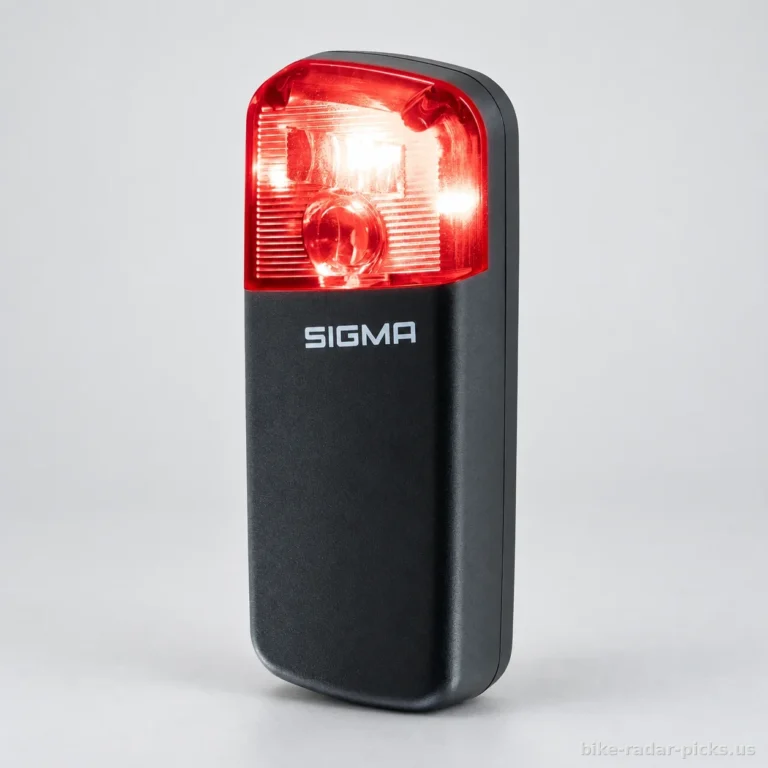 Our rankingsThe best bike radars23 bike radars
By compatible with a bike computer
By detection range
By battery life
Features and options
Our guides to choosing
Prices in USD are indicative: they are converted from the reference catalogue prices in euros at a fixed rate (EUR 1 = $1.08, 9 Sep 2026) and are not prices from a local retailer. The price at your retailer prevails. (14 Sep 2026)
Buying a high-end cycling radar without checking receiver compatibility could mean missing the alerts you expect. Make sure your bike computer or phone is compatible before comparing lighting features.
Prices collected from retailers are for guidance only: they may have changed since, the current price is the one shown by the retailer. No price is shown for models sold only on Amazon. Amounts converted from reference prices in euros using a dated exchange rate.
Top-ranked for detection range, battery life, detection angle and equipment.
Read the review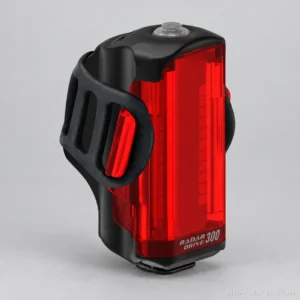
Top-ranked for light output.
Read the review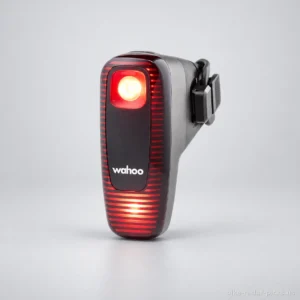
Key strength: detection range, rated 8.5/10.
Read the review| Rankings | Rating | Price | Detection range | Battery life | Weight | Light output | Detection angle | Charging time | Battery capacity |
|---|---|---|---|---|---|---|---|---|---|
| 1. Sigma RECO 81 LINK | 9.2/10 | $131 | 160 m | 30 h | n/a | n/a | 60 ° | n/a | 1350 mAh |
| 2. Lezyne Radar Drive Rear | 7.9/10 | $131 | 150 m | 20 h | 144 g | 300 lm | 35 ° | 3 h | n/a |
| 3. Wahoo TRACKR RADAR | 7.9/10 | n/a | 150 m | 20 h | n/a | 53 lm | 35 ° | 2 h | n/a |
| 4. Garmin Varia RTL515 | 7.7/10 | $150 | 140 m | 16 h | 71 g | 65 lm | 40 ° | n/a | n/a |
| 5. Lezyne Radar StVZO Rear | 7.4/10 | $143 | 150 m | 9 h | 144 g | 40 lm | n/a | n/a | n/a |
Rankings are based on our review ratings, calculated by comparing manufacturer specifications across the full catalogue.Our methodology.
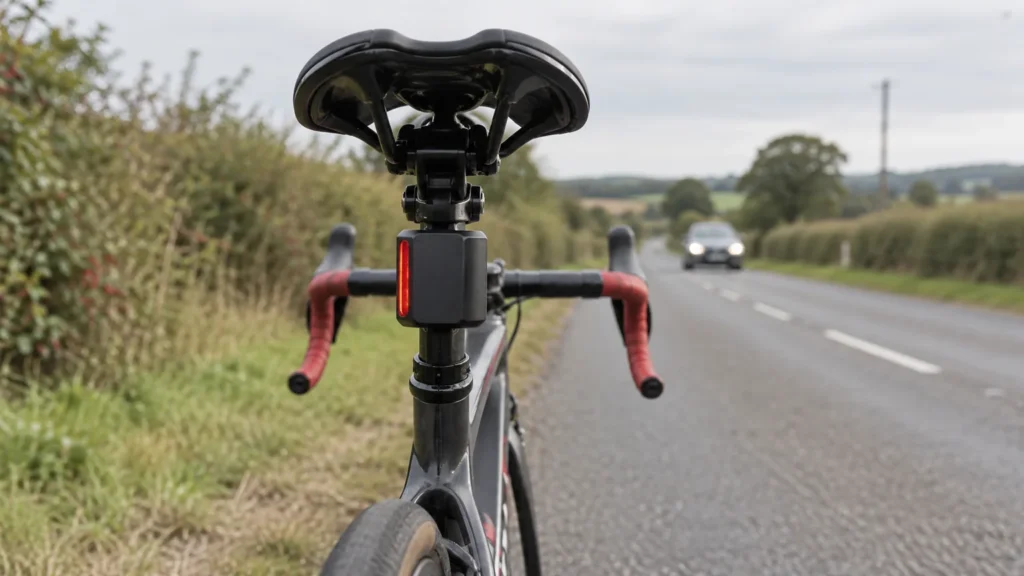
A rear light with radar serves 2 complementary purposes: making you visible and alerting you to vehicles approaching from behind. It gives you additional traffic information without having to look behind you for every alert. It supports your own observation of the road.
Detection and visibility are separate functions. The Trek CarBack, for example, is advertised as providing audible and visual alerts on paired GPS bike computers. Its rear light makes other road users aware of your presence. To receive alerts, compatibility with your equipment therefore matters as much as the radar's specifications.
Some devices offer additional lighting features. If you are looking for a bike radar with braking detection, the Wahoo TRACKR RADAR is advertised as increasing its brightness when you brake. This additional feature does not replace vehicle detection.
This type of equipment is worth considering if you regularly ride on roads shared with motor vehicles. Your choice mainly depends on how you ride and how you want to receive alerts.
Battery life must always be linked to a specific mode. The Garmin Varia RTL515, for example, has an advertised battery life of 6 h in steady mode and 16 h in daytime flashing mode. If you are looking for a bike radar with a steady light, use the battery life for that mode to plan your journeys, allowing a margin.
An alert tells you something is approaching; it does not determine whether a manoeuvre is safe. You must continue to check traffic before moving out or turning. Likewise, a longer advertised range does not, on its own, demonstrate more reliable detection.
The selection on this page helps you compare models based on their listed specifications. Through documentary analysis, we distinguish between advertised features, missing information and points to check so you can choose according to your bike, your journeys and your budget.
Based on an analysis of its specifications, the Garmin Varia RTL515 is the best-documented choice for comparing connectivity, lighting and battery life. The Wahoo TRACKR RADAR will appeal to cyclists looking for a brake light and automatic battery saving. The Trek CarBack deserves your attention for its claimed range.
| Model | Price | Weight | Power source |
|---|---|---|---|
| Sigma RECO 80 LINK | Check the retailer for pricing | 100 Grams | Battery-powered |
| Lezyne Radar StVZO Rear | Check the retailer for pricing | N/A | N/A |
| Trek CarBack | Check the retailer for pricing | N/A | N/A |
| Giant Recon+ TL 300 R | Check the retailer for pricing | N/A | N/A |
| Garmin Varia RTL515 | Check the retailer for pricing | 71 Grams | Battery-powered |
| Wahoo TRACKR RADAR | Check the retailer for pricing | 99 g (3,5 oz) | Battery-powered |
| Garmin Varia RTL516 | Check price with the retailer | 71 Grams | Battery-powered |
| Giant Aegis Radar | Check price with the retailer | n/a | n/a |
Here is how to choose between these models beyond the figures in the comparison:
Check the exact receiver model before comparing ranges. A Bluetooth connection does not guarantee that your app will display vehicles. Receiving alerts and controlling the light are also separate functions.
The RTL515 lists ANT+ for radar and lights, and Bluetooth for radar. Wahoo specifically mentions ELEMNT devices and certain Garmin Edge, Bryton Rider and Hammerhead Karoo models via ANT+ Radar. If you are looking for a Garmin-compatible bike radar, confirm compatibility with your exact bike computer.
To ride with your phone, check which app is required and how alerts are delivered. The RTL516 explicitly advertises this option with a compatible phone. The Aegis, meanwhile, requires a Giant or LIV electric bike equipped with Smart-Gateway 2.0: have the seller confirm the bike’s exact model year.
Claimed ranges reach 240 m for the Trek CarBack, 150 m for the Wahoo and 140 m for the RTL515. If early warning is your priority, the Trek is therefore worth considering. However, these figures do not demonstrate more reliable detection in traffic.
Radar range does not refer to the light’s visibility. The claimed lighting distances of 2 km for the Trek and 1,6 km for the RTL515 refer to how far away their lights can be seen. They do not represent the distance at which these devices detect vehicles.
For the Sigma RECO 80 LINK, request its own documentation: the specifications of the RECO 81 Link cannot be attributed to it.
Compare battery life in the mode you actually use. The RTL515 claims 6 h in steady light mode and 16 h in daytime flashing mode. A long ride with a bike radar with a steady light therefore requires looking beyond the maximum battery life alone.
Wahoo claims more than 10 h in nighttime flashing mode and more than 16 h in battery-saving mode. The latter reduces brightness when no vehicle is detected: the conditions are not equivalent.
Allow a margin for detours and stops. The Sigma recharges via USB-C in around 3 h, but this does not indicate how long its battery lasts on the road.
Check the available space, the shape of your seatpost and whether a saddlebag is fitted. Seatpost mounting is listed for the Sigma and Garmin models, but this does not guarantee compatibility with every bike.
The RTL515 listing states both “not waterproof” and IPX7. The Wahoo listing gives conflicting light output figures. Have these details clarified before buying; they do not provide a basis for naming a winner.
The StVZO designation is not enough to compare detection capabilities either. Before ordering, check:
The RTL515, the Wahoo and the RTL516 fall within a similar price bracket. Spending more therefore does not guarantee a better fit.
Compare the total cost after checking which mounts and accessories are needed. Our analysis is based on retailer listings, without physically handling the products. No usable aggregated feedback supports a conclusion on long-term reliability here.
Prioritise compatibility, then battery life in actual use. Then compare models by their claimed range, lighting features and mounting. Any missing information should be clarified before ordering, especially if it affects your intended use.
Garmin, Wahoo and Trek are worth considering for a rear light with radar, based on the documented features in this selection. Garmin details the modes and battery life of the Varia RTL515. Wahoo lists a brake light and a battery-saving mode for the TRACKR RADAR. Trek specifies detection up to 240 m for the CarBack. These features help you compare models, but are not enough to rank the brands overall.
The most powerful bike light cannot be determined from the available specifications. The Garmin Varia RTL515 claims 65 lumens in daytime flash mode, but its specifications also list a contradictory maximum of 20 lumens. For the Wahoo TRACKR RADAR, figures vary between 25 and 53 lumens. Compare output in equivalent modes once the values have been confirmed. Brightness alone does not indicate how well the radar detects vehicles.
The Garmin Varia RTL515 is a strong choice if you are looking for a rear light with radar and well-documented features. Its specifications state a detection range of up to 140 m and several light modes, including a peloton mode. However, check your receiver’s compatibility and the water resistance rating, which is described inconsistently. If a brake light matters more to you, the Wahoo TRACKR RADAR is also worth considering.
The best light depends on your route, preferred light mode and equipment. For a long daytime ride, the RTL515 claims up to 16 h in daytime flash mode. If you want a light that gets brighter when braking, the Wahoo TRACKR RADAR offers this feature. If you are looking for a bike radar with a steady light, compare battery life in that specific mode. This selection covers rear bike lights and cannot help you choose a front light.
Yes, some models can send alerts to a compatible phone, but this capability must be checked for each model. The Garmin Varia RTL516 specifications explicitly mention pairing with a compatible smartphone and the Varia app. The Wahoo TRACKR RADAR specifications list compatibility with the Wahoo app. Bluetooth alone does not guarantee that it will work with any app. Also check how you can access alerts during your ride.
The radar range indicates the stated distance at which vehicles can be detected, while light visibility describes the distance from which the light can be seen. The Trek CarBack claims detection up to 240 m and light visibility up to 2 km. For the Garmin Varia RTL515, these figures are 140 m and 1,6 km respectively. A light that is visible from further away does not necessarily detect vehicles sooner.
Allow for battery life that exceeds the length of your ride, based on the light mode you use. The Garmin Varia RTL515 claims 6 h in steady mode and up to 16 h in daytime flash mode. The Wahoo TRACKR RADAR lists more than 10 h in nighttime flash mode and more than 16 h in battery-saving mode. For a bike radar with a daytime flashing light, battery life quoted for another mode does not provide a like-for-like comparison.