Best bike radar powered by an electric bike 2026, top picks and comparison
Can your e-bike power your radar directly? Before choosing an e-bike-powered cycling radar, read the buying guide below to clarify power requirements, mounting and how you receive alerts.
Prices collected from retailers are for guidance only: they may have changed since, the current price is the one shown by the retailer. No price is shown for models sold only on Amazon. Amounts converted from reference prices in euros using a dated exchange rate.
How we picked these models
- 1 model selected because they have the feature “Powered by an electric bike” according to data published by manufacturers and retailers.
- See how we rate →
- No brand pays to be included in this selection or to rank higher.
Our guides to bike radar
Why choose an e-bike-powered cycling radar?
Why consider a radar powered by your e-bike
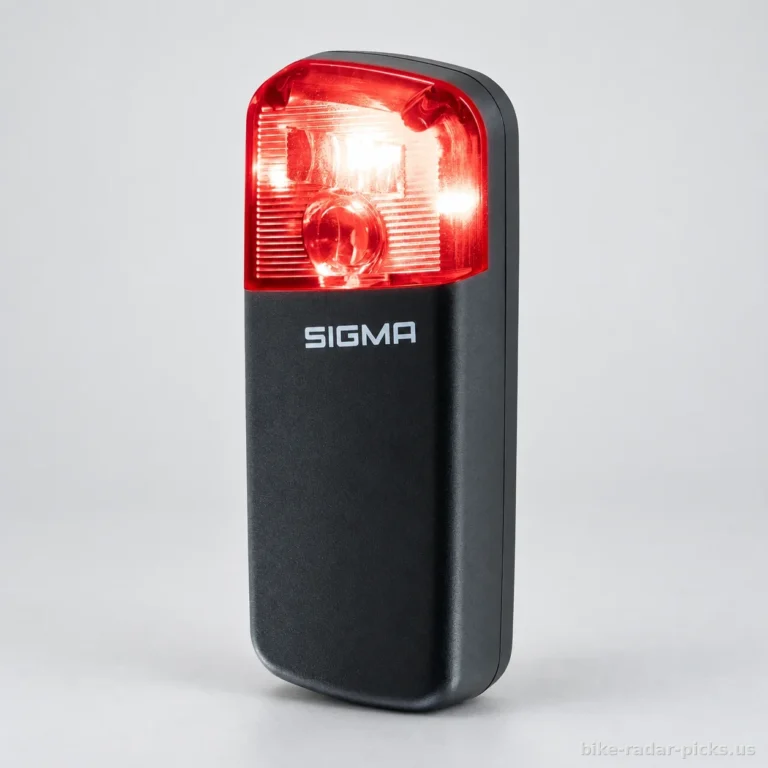
The best bike radar powered by an e-bike is the one whose power supply, mounting and alert reception are compatible with your equipment. The Garmin Varia eRTL616 is the only model in this selection, but that alone does not make it the best choice for your bike.
The aim of this category is simple: to power the radar from the bike and reduce the need for separate charging. If this integration is confirmed for your setup, you have fewer accessory batteries to manage before setting off. This can make preparing for frequent journeys easier, particularly when your e-bike is your main means of transport.
This approach is best suited to cyclists who want to leave their equipment fitted and simplify their routine. However, it requires a check beforehand: having a battery on the bike does not guarantee that an accessory can be connected to it. Electrical compatibility must therefore take priority over additional features.
When a rear radar can be useful
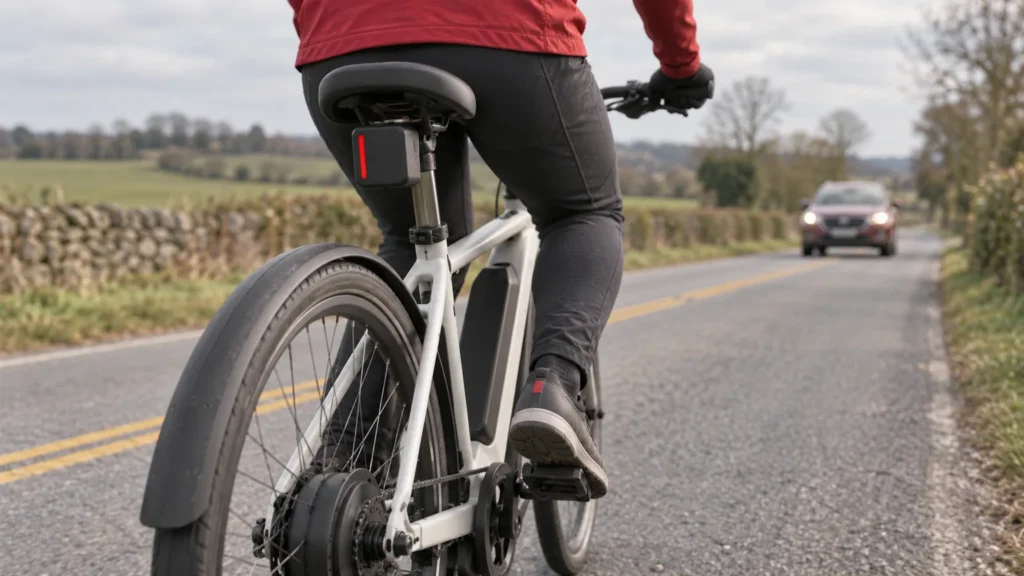
A rear radar is designed to alert you to vehicles approaching from behind. On a shared road, this information can complement your awareness of traffic and help you stay attentive to your surroundings. It never means it is safe to turn or move out.
Its usefulness depends more on your routes than on their length. Consider these questions in particular:
- Do you regularly ride on roads where vehicles approach from behind?
- Do your daily journeys include stretches shared with motor traffic?
- Would you like additional information without adding more accessories that need charging?
For frequent commutes as well as road rides, this equipment may meet a relevant need. If you mainly ride on routes separated from motor traffic, first consider the situations in which an approaching vehicle alert would actually be useful to you.
Keep an essential limitation in mind: radar complements your vigilance. It does not replace visual checks or anticipating junctions. The equipment's usefulness also depends on your ability to notice its alerts without taking your attention off the road for too long.
Why the best choice depends on your bike
Choosing a radar for an e-bike means considering the entire installation. The bike must be able to power the equipment, the mounting must be suitable, and alerts must reach a compatible device. A model's inclusion in a selection does not guarantee that your setup meets these conditions.
Searching for a Garmin-compatible bike radar or a Wahoo-compatible bike radar concerns how information is received. It does not, by itself, resolve the question of connecting to the bike's battery. These checks are separate, and all compatibility requirements must be confirmed before purchase.
The selection on this page lets you consider the Garmin Varia eRTL616 as an option to investigate further. Base your decision on confirmation of its compatibility with your exact bike, the parts needed for mounting and the device intended to receive alerts.
How do you choose an e-bike-powered cycling radar?
The best bike radar powered by an electric bike is the one whose power supply, mounting and alert reception are compatible with your equipment. The Garmin Varia eRTL616 is the only model in this selection. Before choosing it, have these points confirmed for your specific bike: its inclusion in this category does not guarantee that it will work with your setup.
How to check electrical compatibility before buying
Start by noting your bike’s exact model, its motor system and the available information about its electrical system. Send these details to the manufacturer or a qualified installer. An answer based solely on the bike’s brand is not enough to make a decision.
Ask for confirmation of electrical compatibility covering the intended connection and any components required. Do not assume anything based solely on the radar’s, motor’s or battery’s product name.
- Which connection point should be used on your bike?
- Does installation require a specific cable or adapter?
- Does the electrical system need to be configured?
- What conditions determine when the equipment powers on and off?
If these answers remain unclear, put your decision on hold. Equipment that looks appealing on paper cannot resolve an incompatible connection.
How to plan a complete installation
Establish what is included and what needs to be added. Have a list drawn up of the cables, connectors, brackets and fasteners required for your setup. Also ask who will carry out the installation and who will check that it works once completed.
Assess the proposed location with your usual accessories in place. A rack, bag or other equipment must not interfere with the positioning specified by the manufacturer. Also check the cable routing, how it is secured and the precautions taken wherever it is exposed to movement or friction.
To help you decide, ask for a description of the complete installation. A proposal identifying every required component provides a firmer basis for your decision than simply confirming that the radar is available.
How to receive alerts during your rides
Powering the radar and receiving alerts require 2 separate checks. Ask which device will display the information, then confirm its exact compatibility with the radar you are considering. Also check whether any accessories or settings are required.
Searching for “Garmin-compatible bike radar” can help narrow your selection, but this phrase does not guarantee that your specific device will receive alerts. Rely on an official compatibility list or confirmation covering the models concerned.
- Will the alerts be visible with your handlebar setup?
- Will the information remain accessible during navigation?
- How will you be notified if the connection is lost or the system becomes unavailable?
Choose a setup whose indicators and limitations you understand before buying. If you still need to acquire the receiving device, include it in your plans from the outset.
Which detection and durability criteria should you compare?
Consult the documentation to assess the stated range, detection conditions and limitations described by the manufacturer. Range alone is not enough to compare devices: also check the circumstances in which that figure applies.
For weather resistance, look for an explicitly documented protection rating. The “IPX6 bike radar” category can serve as a point of comparison, but does not establish that a model has this protection unless it explicitly states so.
Finally, check the positioning and cleaning instructions. Choose a device whose installation requirements suit your bike and whose restrictions are compatible with your journeys. Any feature missing from the documentation should remain a point to clarify.
| Criterion | What to look for | Common mistake |
|---|---|---|
| Power supply | Confirmed compatibility with the exact bike | Relying solely on the motor brand |
| Installation | Complete list of connectors and mounts | Assuming all accessories are included |
| Alerts | Identified receiver and verified compatibility | Confusing power supply with reception |
| Detection and protection | Documented conditions and limitations | Comparing a feature without its context |
| Overall budget | Equipment, accessories and installation included | Considering only the radar |
How to assess the overall equipment budget
Compare the cost of the complete installation: radar, connection, mounting, alert reception and any professional installation work. Ask for essential items to be listed separately from optional extras. This will let you compare proposals that genuinely meet the same needs.
Entry-level, mid-range and high-end positioning do not replace this check. They establish neither compatibility nor alert quality. No verifiable market range provides a basis here for setting reliable thresholds: it is better to obtain a quote tailored to your bike.
Mistakes to avoid
- Buying before identifying the connection required.
- Confusing electrical compatibility with receiver compatibility.
- Overlooking panniers and accessories when choosing the mounting location.
- Assuming the radar offers protection or a feature without documentation.
- Choosing a product tier before checking the complete installation.
Key takeaways
Follow this order: power supply, mounting, alert reception, detection conditions, then overall budget. Before considering the Garmin Varia eRTL616, first obtain confirmation of compatibility with your bike. With a selection limited to 1 model, the decision rests on this practical compatibility, without an artificial ranking.
What should you know before relying on radar alerts?
Does a bike radar replace looking behind you before turning?
No, a bike radar does not replace looking behind you before turning or changing your position on the road. It provides additional information about approaching vehicles without guaranteeing that the road is clear. Maintain your safety habits: look behind you, signal your intention and check that it is safe to manoeuvre. The absence of an alert never means it is safe to turn.
Can a rear radar detect every hazard?
No, a rear radar cannot detect every hazard on a ride. Do not rely on it to warn you about an obstacle ahead, a defect in the road surface or every road user around your bike. Check the documentation for the equipment you are considering to understand its detection capabilities and limitations. Treat alerts as an aid to staying alert and continue to watch your surroundings, even when the device remains silent.
Does a bike radar record images?
No, radar functionality does not mean that the device records images. Vehicle detection and video capture are separate functions. If you want to keep footage of your rides, explicitly check the specifications for a camera and a recording function. Similarly, the term “bike radar with a steady light” refers to the lighting: it does not indicate that a camera is included.
Can a bike radar help recover a stolen bike?
No, radar functionality alone cannot help you recover a stolen bike. It is designed to detect vehicles while riding, which is different from remote tracking. Being powered by the bike’s battery does not establish that an anti-theft function is included either. If recovering your bike after theft is your priority, look for a suitable tracking device and check its operating requirements, particularly when the bike is switched off.
Is a radar compulsory on an electric bike?
No, in France, a radar is not compulsory on an electrically assisted bike covered by bicycle regulations. It remains an additional accessory and does not replace mandatory safety equipment. Make sure you distinguish between detection and lighting functions: the description “bike radar with a daytime flashing light” is not enough to establish that your equipment complies with regulations in every situation. Check local rules before riding abroad.
How do you maintain a rear bike radar?
Clean your rear radar according to the manufacturer’s recommendations and regularly check the mounting and the visible condition of the cables. For equipment powered by an electric bike, follow the shutdown procedure before doing any work on the connection. Avoid pressure washing unless the manufacturer explicitly permits it. After an impact, a loose mounting or an unusual alert, have the installation inspected and check that the device works before relying on its alerts again.