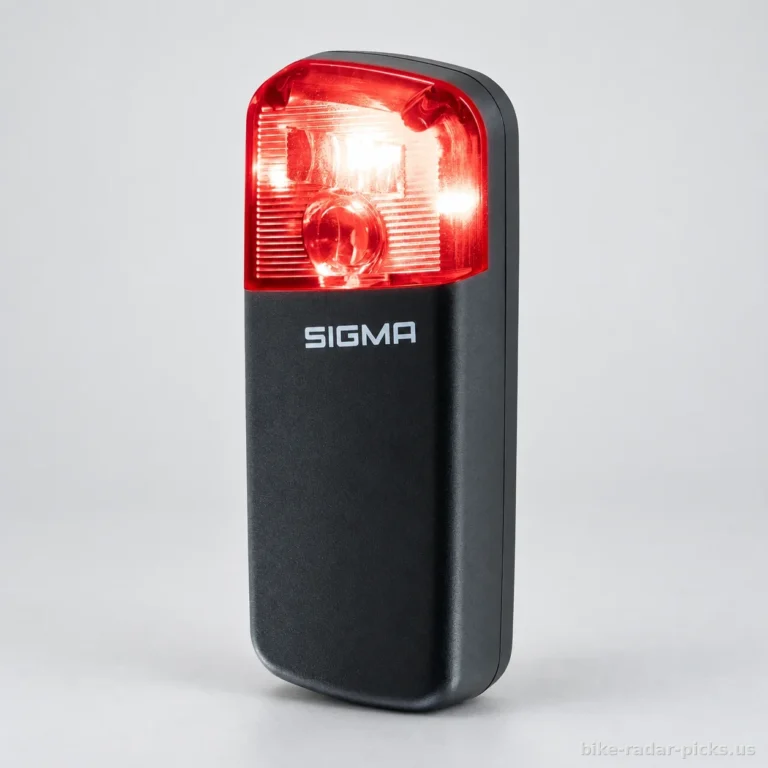
Best bike radar with an IP67 protection rating 2026, top picks and comparison
Compare the battery life and documented protection of your next IP67 bike radar. The buying guide further down the page helps you assess compatibility and operating conditions.
Prices collected from retailers are for guidance only: they may have changed since, the current price is the one shown by the retailer. No price is shown for models sold only on Amazon. Amounts converted from reference prices in euros using a dated exchange rate.
How we picked these models
- 3 models selected because they have the feature “IP67 protection” according to data published by manufacturers and retailers.
- See how we rate →
- No brand pays to be included in this selection or to rank higher.
Why choose an IP67 bike radar for your rides?
Why look for an IP67 bike radar
The best IP67 bike radar is one with documented protection that meets your needs for detection, compatibility and battery life. For rides exposed to rain or splashes, this rating is a relevant selection criterion. However, it does not guarantee alert quality or resistance to all riding conditions.
The aim is to choose equipment suited to your everyday riding. Do you cycle to work despite uncertain weather? Do you alternate between roads and trails? Check for an IP67 rating in the documentation for the exact model, then check any restrictions on cleaning, the charging connector and water exposure. Simply claiming a product is “waterproof” is not precise enough.
An IPX7 bike radar should not automatically be considered equivalent to an IP67 model. To buy with confidence, compare the protection actually documented, without inferring a device’s performance from its product name alone.
How a rear radar can help on your rides
A rear radar helps you become aware of vehicles approaching from behind. The supplied Galaxus guide describes visual and audible alerts sent to a compatible bike computer, watch or phone. The practical benefit is extra information to help you anticipate and adjust your riding, particularly when your attention is focused on the road surface.
It is important to distinguish between detection and lighting. The radar informs the cyclist; the rear light helps make them visible. These functions complement each other, but their presence alone tells you nothing about alert accuracy or whether the lighting suits your route.
- On the road, alerts can help you notice an approaching vehicle before a manoeuvre.
- On everyday rides, they provide information about traffic approaching from behind.
- On routes combining trails and roads, they are useful on sections shared with vehicles.
The absence of an alert never guarantees that the road is clear. The radar remains an aid: it does not replace looking behind you before changing direction or following traffic rules. Also check that your receiving device delivers the expected alerts.
Which cyclists should prioritise this protection
For regular cycle commuting, the priority is equipment that is easy to install, charge and use in changing weather. For road cycling, compatibility with your bike computer and battery life in your chosen lighting mode become decisive. For trails, also check the maintenance instructions and mount stability, without assuming that an IP67 rating permits any cleaning method.
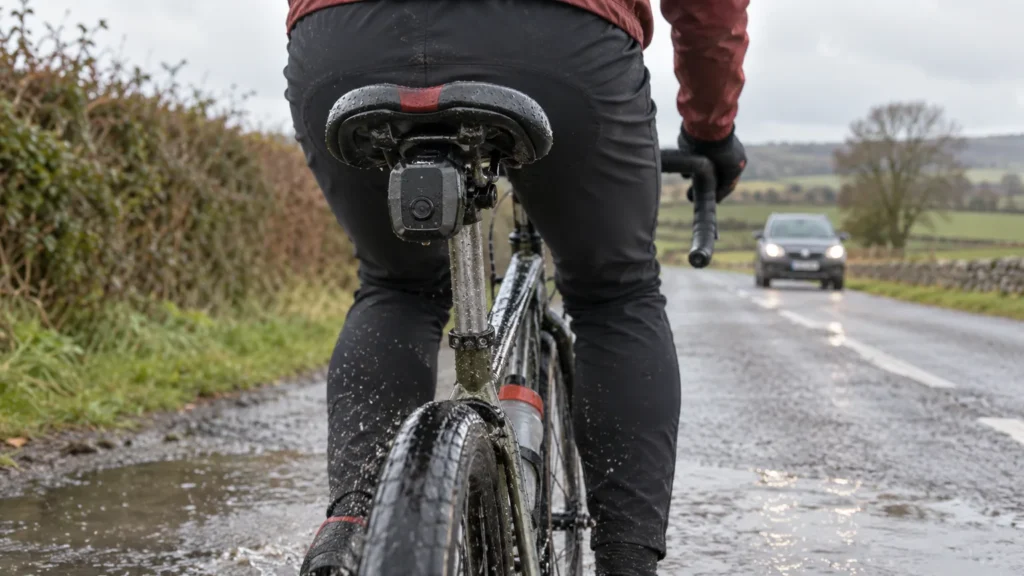
If you carry belongings, consider the available mounting space. A seatpost-mounted bike radar must be installed according to its instructions, with any bag positioned so that it does not obscure the device.
This guidance applies to the radar lights presented, rather than a selection with confirmed IP67 protection. Also allow for any mounts, adapters or receiving devices needed.
The selection on this page will help you compare these criteria against your riding needs. Prioritise explicitly documented protection, confirmed compatibility and a setup suited to your bike before comparing additional features.
How do you choose an IP67 bike radar that suits your equipment?
To choose the best bike radar IP67, first check the documented protection, compatibility with your equipment and battery life in your chosen lighting mode. The stated rating alone is not enough to distinguish between devices. The right choice delivers useful alerts throughout your rides and has a mount suited to your loaded bike.
How to check IP67 protection before buying
Insist on an IP67 rating in the documentation for the exact model. A product description that merely says “waterproof” is not enough. Check the conditions for protection against dust and temporary immersion, along with the manufacturer's exclusions.
Do not assume an IPX7 bike radar offers equivalent protection. This designation does not document dust protection in the same way. The available excerpts provide no reference to a standard that would allow the precise conditions of these ratings to be detailed here.
Before buying, pay particular attention to the instructions concerning rain, mud, water jets and the charging connector. A stated protection rating does not mean you can clean the device with a water jet. If you cannot find the manual, ask the seller for it before choosing the device for rides with regular exposure to these conditions.
Will your bike computer or phone display the alerts
Start with the receiver you already own. Look for confirmation that your specific model is compatible with the radar model. ANT+ and Bluetooth specifications alone do not guarantee access to the alerts you expect.
- With a bike computer, check that it supports radar functionality and whether any updates are required.
- With a phone, identify the required app and the conditions for receiving alerts when the screen is off.
- Check visual alerts, audible alerts and available lighting controls separately.
If you are looking for a Garmin-compatible bike radar, check your specific bike computer rather than relying on the brand alone. An additional receiver can significantly affect the overall cost.
What data can help you compare detection
The stated range indicates a claimed maximum capability. On its own, it does not demonstrate consistent alerts along your route. Also examine coverage and how multiple vehicles are handled, but only where this information is documented.
For road cycling, look for explanations of how approaching vehicles are tracked. For winding routes, prioritise documentation that describes detection limitations. An undocumented feature remains unknown, even if the marketing sounds reassuring.
Always distinguish between stated specifications and reported observations. The supplied excerpts do not allow a rigorous reliability ranking of IP67 devices. The absence of an alert never guarantees that the road is clear. The radar complements your own checks before a manoeuvre.
What battery life to expect with suitable lighting
Compare battery life in equivalent modes with the radar active. A maximum runtime without details of the lighting mode does not tell you whether the device will last for your ride.
For commuting, consider both the outward and return journeys, then how often you can realistically recharge. For long rides, allow a margin beyond your usual riding time. If you prefer a bike radar with a steady light, look for the battery life specified for that exact mode.
Also check how low battery is indicated, which cable is required and which functions remain available as the charge drops. Without documented answers, do not assume that detection and lighting will both remain active.
Will the mount fit your bike with its accessories installed
Check the shape of your seatpost and which adapters are actually included. A mount described as universal still needs checking against your setup, particularly with an aero seatpost or limited space.
Assess the mounting position with your saddlebag full and your luggage fitted. Follow the specified orientation and keep the light and detection area unobstructed. If the saddlebag takes up the intended mounting position, look for an explicitly compatible mounting solution. Finally, check that you can remove the device for charging and clean its mount as instructed in the manual.
How much should you budget for your complete setup
Compare the cost of everything you need, not just the radar. Include any missing mounts, adapters and receiver. No usable pricing data is provided for this collection, so a price range would not be adequately supported.
Use this checklist to decide what is worth spending on for the way you ride.
| Criterion | What to look for | Common mistake |
|---|---|---|
| Protection | A documented rating and clearly explained maintenance | Relying solely on the word “waterproof” |
| Compatibility | Confirmed alerts on your receiver | Only checking the stated protocol |
| Detection | Documented operation and limitations | Choosing solely by maximum range |
| Battery life | Sufficient runtime in the mode you use | Comparing different modes |
| Mounting | A mounting setup compatible with your luggage | Forgetting to account for a full saddlebag |
| Budget | A complete, usable setup | Overlooking necessary accessories |
Mistakes to avoid
- Assuming a device offers the same protection as another model from the brand.
- Buying before checking how alerts actually appear.
- Confusing light output with detection quality.
- Choosing a mount that obscures the light once the bike is loaded.
Key takeaways
Choose a radar with documented protection, compatibility and mounting requirements. Then compare devices based on usable battery life and total cost. Any missing critical information must be clarified before purchase.
What should you know before buying an IP67 bike radar?
What is the best bike radar with IP67 protection?
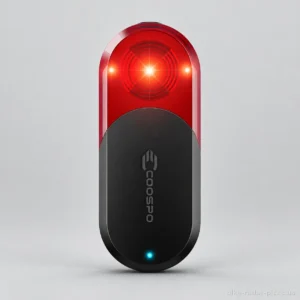
The available information is insufficient to identify the best IP67 bike radar. The COOSPO TR70 is listed with this protection in the supplied commercial excerpts, but this claim still needs to be confirmed in the documentation for the exact model. When choosing, prioritise documented IP67 protection, explicit compatibility with your receiver and battery life suited to the lighting mode used. Waterproofing alone is not enough to distinguish between models.
Which rear bike radar detects vehicles most effectively?
No model can be declared the most effective based solely on the information provided. An advertised maximum range does not demonstrate consistent alerts in every situation. Also compare the available information on detection coverage, multiple vehicles and operating limitations. The excerpts reviewed do not constitute a comparison under identical conditions. The absence of an alert never guarantees a clear road.
What is the difference between the Bryton Gardia R300 and the Garmin Varia?
The comparison depends on the exact models, as “Garmin Varia” refers to several models and the supplied excerpt features the Bryton Gardia R300L, not the R300. BlogCyclisme positions the R300L as a budget option and the Varia RTL515 as a benchmark, without providing a detailed comparison of detection conditions here. Before choosing, focus on checking the stated protection, lighting modes and compatibility with your bike computer.
Can you use a bike radar without a subscription?
To choose a bike radar without a subscription, check that receiving alerts and using the features you want do not require any paid service. The supplied excerpts do not detail these conditions for each model. Distinguish between the price of the radar, any purchase of a compatible bike computer and services offered by an app. The purpose here is to detect vehicles approaching from behind, which is unrelated to speed camera alerts.
What is the difference between IP67 and IPX7 for a bike radar?
IP67 indicates protection against dust and water, while IPX7 does not specify a level of dust protection. The “X” therefore does not necessarily mean there is no protection. However, an IPX7 bike radar must not be described as equivalent to IP67. Consult the manual for the conditions applicable to the device, particularly regarding immersion and closing the charging port.
Can you use an IP67 bike radar in the rain and clean it with a water jet?
Documented IP67 protection is relevant for riding in the rain, but it does not automatically mean cleaning with a water jet is permitted. Immersion conditions differ from exposure to a pressurised jet. Follow the manufacturer's care instructions, particularly for mud and the charging port. Unless the manual explicitly permits it, avoid water jets and use gentle cleaning methods that follow the instructions.
Does an IP67 bike radar work with all GPS bike computers and phones?
No, the IP67 rating provides no information about compatibility with a bike computer or phone. Advertised support for ANT+ or Bluetooth does not guarantee that alerts will appear on your device. For a Garmin-compatible bike radar, for example, check the exact bike computer model and supported features. On a phone, also check the required app and the conditions for receiving alerts.
Where should you mount a rear radar when the bike has a saddle bag?
Install the radar in a location approved by the manufacturer, oriented according to the manual, with no bag in front of the sensor or light. There may be insufficient space for a seatpost-mounted bike radar when luggage hangs low. In that case, check whether a mount compatible with your setup is available. Your choice should be guided by mounting stability, clearance around the radar and visibility of the light.